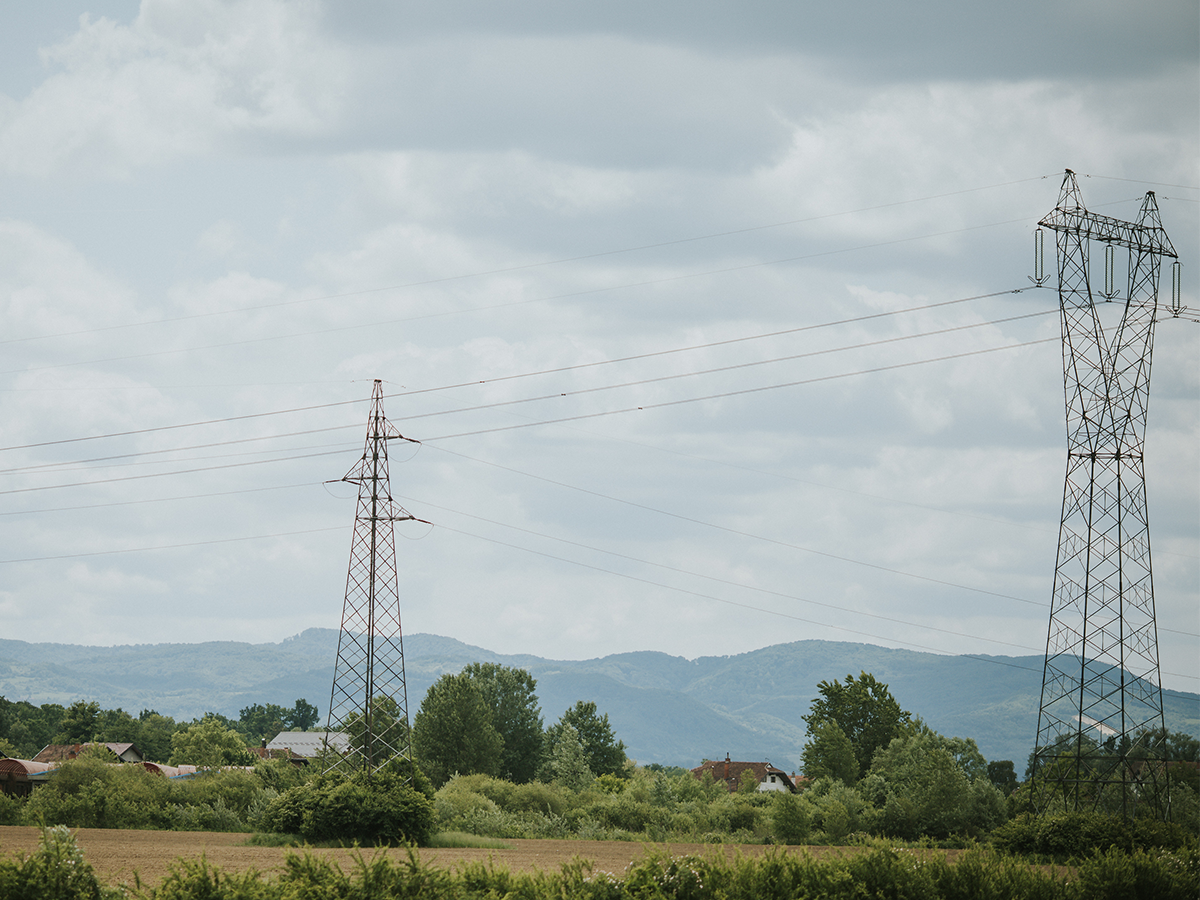
Beneath the hills, cutting through the British countryside and under our streets, a quiet debate is growing with renewed urgency: do the advantages of underground cables outweigh overhead?
The Government’s Clean Power 2030 Action Plan, a call to arms to achieve net-zero ambitions, has set the stage. It advocates for a modernised grid that is better for the planet and promises to generate thousands of green jobs. But as more wind farms rise offshore and our demand for energy grows onshore, the question becomes: Do we continue to erect pylons and cables across our landscape like bunting or hide them beneath our feet? This has led to an inevitable weighing up of the two – overhead lines vs underground cables.

Currently, the nation’s energy relies on 4,500 miles of overhead transmission lines, a stark contrast to the mere 900 miles of underground cables. Overhead lines are cheaper, faster to repair, and embedded in decades of utility planning. But they also intrude upon beauty, fail under storms, and remain a persisting hazard for wildlife, workers, and aesthetics alike.
So, is this a case where burying the problem is quite literally the best solution?
Buried cables aren’t a new approach. They’ve long run through our cities, delivering power beneath the streets and buildings. Their appeal is growing. Underground cables are storm-resistant, safer, and far more discreet in time.
They don’t mar the skyline, nor interfere with heritage sites or biodiversity corridors.
Recent projects like the North Wessex Downs and the Costworld National Landscape have proven that underground can yield promising results. The pylons have been removed, and in their place are now butterfly-filled meadows and uninterrupted views. The National Grid’s £500 million Visual Impact Provision fund is making this possible, turning the eyesores into a sight for sore eyes.

When it comes to overhead lines vs. underground cables, you need to consider the potential downsides of each, and for underground cables, the cost is a major factor. Burying high-voltage lines can cost five times more than hanging them.
There are also technical limitations. High-voltage underground cables require precise insulation and cooling. Faults are harder to find. Flooding is a threat. And when things go wrong, excavation can be disruptive and expensive.
Still, technological innovation is turning these liabilities into problems that can be addressed. Projects like the Dogger Bank Wind Farm – the world’s largest wind farm – rely on buried cables and advanced protective systems to carry power from sea to shore safely. Here, Centriforce’s Stokbord® Utility Protection system has cut installation time by up to 30 times and improved worker safety dramatically as it curbs the need for workers to enter trenches.
The case for undergrounding isn’t universal, but the advantages of underground cables are compelling in context. Underground cables are the natural choice in urban environments where space is tight and aesthetics matter, and also in rural areas of environmental conservation for nature and/or beauty. However, overhead lines may still make more sense in some remote or rural areas.
The Government’s policy already leans this way. Nationally designated landscapes like AONBS and National Parks receive preferential treatment, and underground mining is encouraged to preserve natural character. But critics argue that more could be done—and sooner.
In the end, the conversation should not be about overhead lines vs. underground, but about when, where, and how to balance the two. A resilient, intelligent national grid will require both. It’s a question not only of cost and capability, but of vision.
As Britain retools its energy system for a post-carbon future, our infrastructure must do more than deliver electricity. It must respect landscapes, enhance safety, support local economies, and align with the values of a greener generation.
Perhaps, in burying our power, we uncover something far greater.

This summary only scratches the surface. To explore detailed case studies, policy insights, engineering data, and practical
recommendations for rethinking the future of the UK’s energy infrastructure, download the full white paper: Crossed Wires? Rethinking the Underground vs Overhead Debate.